
When Does a "Logo Refresh" Become a Necessity?
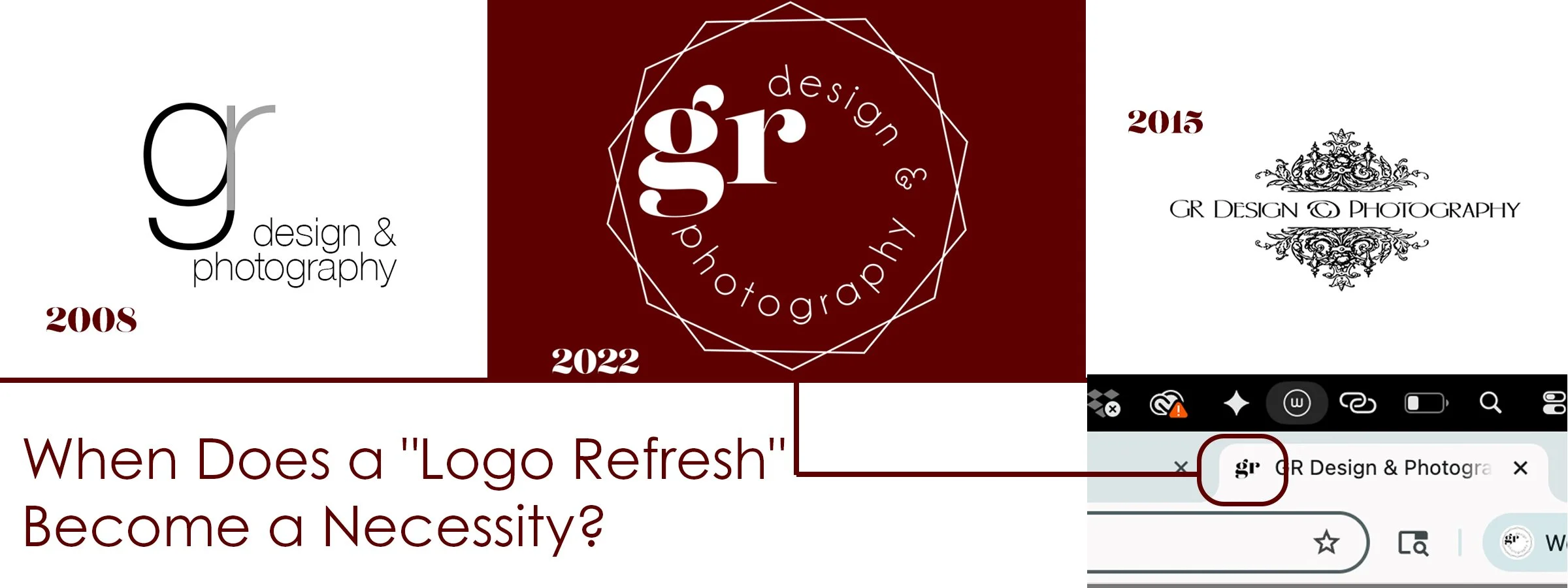
Many business owners treat their logo like a "set it and forget it" asset. A logo is more like a visual handshake, and if your handshake feels limp, outdated, or confusing, people will hesitate to do business with you.
How do you know if you’re just bored with your look or if it’s actually time for a professional intervention? Check your brand against these four red flags:
It Fails the "Postage Stamp" Test
Back in the day, logos were designed for letterheads and storefronts. Today, they live on Apple Watch faces, mobile app favicons, and social media icons.
The Test: Shrink your logo down to the size of your thumb on your phone screen. Can you still tell what it is? If it turns into a blurry, cluttered mess, you need a Responsive Logo refresh, a simplified version of your brand built for the digital age.
You’re Constanty Explaining It
If you find yourself saying, "Well, the logo looks like a bird, but we actually do accounting," you have a brand misalignment.
The Reality: Your business has likely pivoted. You might have started as a solo freelancer but grown into a team. If your visual identity still reflects who you were five years ago, you are capping your current growth potential.
The "DIY" Guilt
This is the most common reason for a refresh. You made your first logo in Canva or a cheap "logo maker" when you were just starting out.
The Sign: You hesitate to send people to your website. You feel a "ping" of embarrassment when you hand over a business card. This lack of confidence is contagious. If you don't feel like a premium brand, your clients won't treat you like one.
Technical Incompatibility
Does your logo look great on a white background but disappears on a dark one? Does it look "muddy" when printed on a t-shirt?
The Sign: A professional logo comes with a "system"—inverted versions, black-and-white versions, and vertical/horizontal layouts. If you only have one .JPG file saved on your desktop, you don't have a brand; you have a picture.